Baltic amber at home – where it comes from, how to recognise it and how to care for it
Amber is often called a gemstone, yet it is not a stone at all. It is fossilised tree resin – an organic material, light and warm to the touch. It has been gathered on the Baltic coast for thousands of years, and today it appears not only in jewellery but also in furniture and home accessories.
Here is where Baltic amber comes from, how to tell it apart from imitations, and how to care for objects that contain it.
Where Baltic amber comes from
Tens of millions of years ago, vast forests grew in what is now northern Europe. The trees produced resin – just as pines do today. It ran down the trunks, hardened and ended up in the soil, and later in sediments carried by rivers.
Over millions of years, cut off from air and pressed by layer upon layer of sediment, the resin hardened and changed its composition. That is how amber was formed. The amber we set into our furniture is the fossilised resin of forests that grew around 40 million years ago.
Baltic amber, also known as succinite, is distinguished by its succinic acid content – this is how its origin is identified. The sea still washes it onto the beaches, especially after autumn storms.
How to recognise genuine amber
There is no shortage of imitations: glass, plastics or copal – young resin that has not completed its transformation. A few simple observations help tell them apart.
- Weight and temperature. Amber is very light and feels warm in the hand. Glass of the same size is noticeably heavier and colder.
- Salt water. Amber sinks in fresh water but floats in strongly salted water. Glass and most plastics stay at the bottom. This test is only suitable for loose pieces without metal.
- Static electricity. Rubbed against wool or silk, amber attracts small scraps of paper.
- UV light. Under an ultraviolet lamp, Baltic amber fluoresces, usually bluish or greenish. Imitations often glow differently or not at all.
- The inside. Air bubbles, fine cracks and sometimes plant fragments are traces of nature. A perfectly uniform, “sterile” piece is worth asking about.
We do not recommend hot-needle or solvent tests – they damage the surface and are unnecessary for a finished object. The simplest way is to ask the seller about the origin and exact composition.
Amber or amber-coloured resin?
In furniture, this distinction matters. Natural amber means real pieces of fossilised resin. Amber-coloured resin is a modern material – it can create a similar warm glow, but it is not amber.
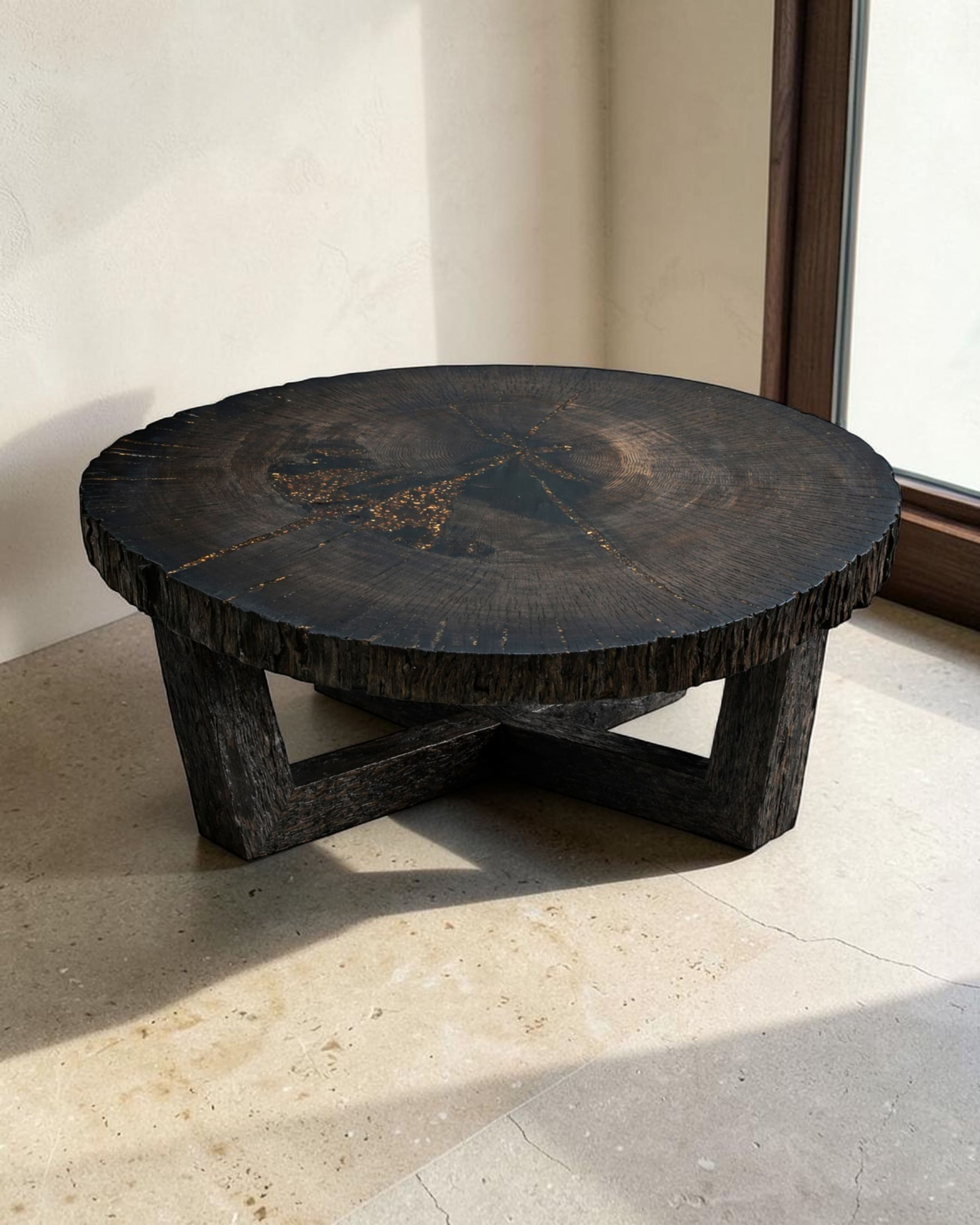
We always make this clear in our descriptions. In the Amber Origin and Amber Atlas coffee tables, natural Baltic amber is combined with resin and bog oak from a deposit whose samples were radiocarbon-dated to around 5,000 years. In Amber Atlas, the amber is scattered across the top like islands on a map – hence the name.
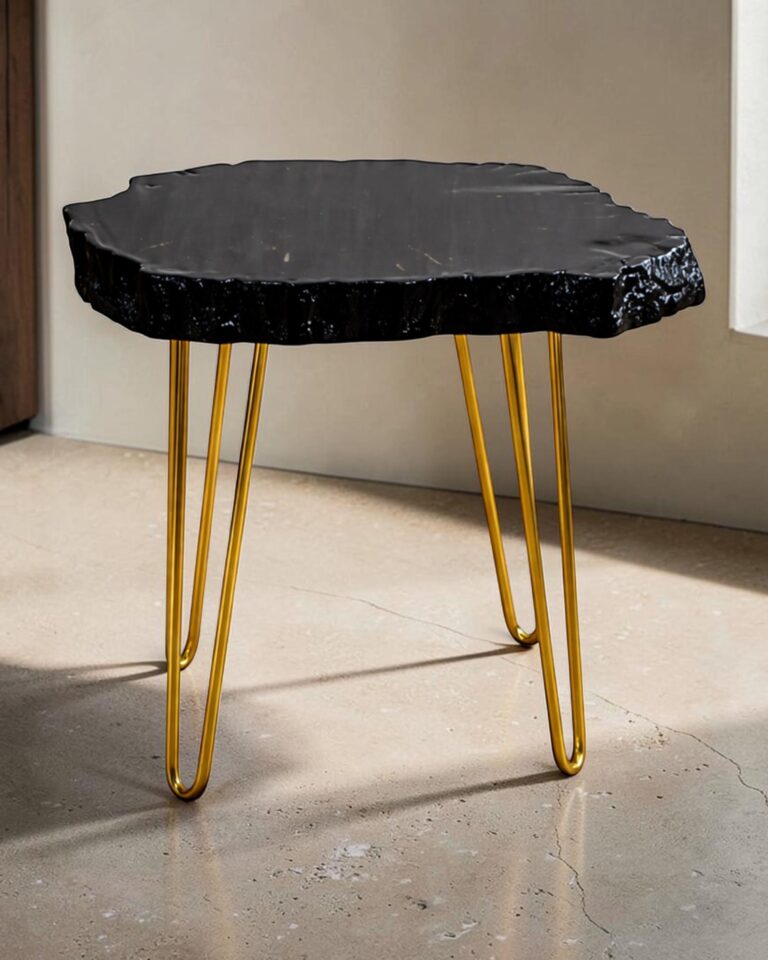
Amber Halo, on the other hand, pairs bog oak from a deposit dated to around 6,000 years with amber-coloured resin and a fine powder that looks like stardust in the light. The same warm mood, a different material – and that is exactly what we call it.
Where amber looks its best
Amber needs light. It looks most beautiful in side light or in the warm light of a lamp – that is when its honey and brown tones and its depth come through. Against the natural black of bog oak, the effect is even stronger.
You do not need a piece of furniture to start. The bog oak candle holder for 2 tealights with amber marbling is a small object in which the flame brings the warm tones of the decoration to life. Always place the tealight in the cup provided – the flame must not touch the wood or the resin.
How to care for amber
Amber is soft – around 2–2.5 on the Mohs scale – so it scratches easily. It does not like high temperatures, harsh chemicals or long exposure to direct sunlight, which darkens it over time.
- Clean with a soft, slightly damp cloth and wipe dry.
- Do not use alcohol, solvents or harsh cleaning agents.
- Place hot dishes on mats or coasters.
- Avoid prolonged direct sunlight.
- Store amber jewellery separately, away from harder stones and metal.
In furniture, the amber is additionally protected by a layer of resin, so everyday care simply means looking after the tabletop.
Did you know? Amber gave electricity its name
The ancient Greeks noticed that rubbed amber attracts straw and dust. They called it ēlektron. Around 1600, the English scholar William Gilbert, describing this phenomenon, coined the Latin electricus – “like amber”. That is how electricity got its name from amber.
See amber set in black bog oak
Amber is best judged in person – in the light and from different angles. You can see our amber tables at our workshop in Krosno, by appointment.
Have a question about a specific piece or want to arrange a visit? Message us on WhatsApp: +48 888 795 404. Architects and interior designers are welcome to explore our trade programme for designers.